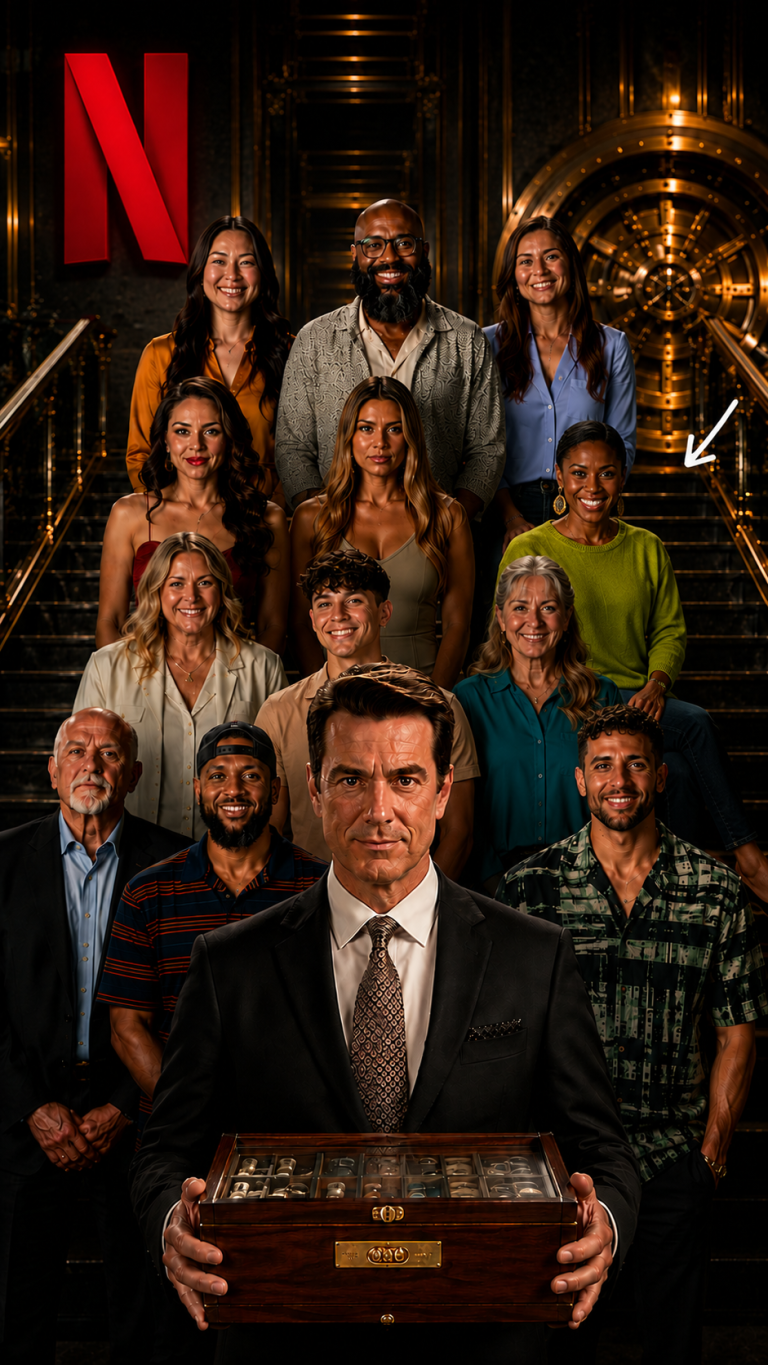

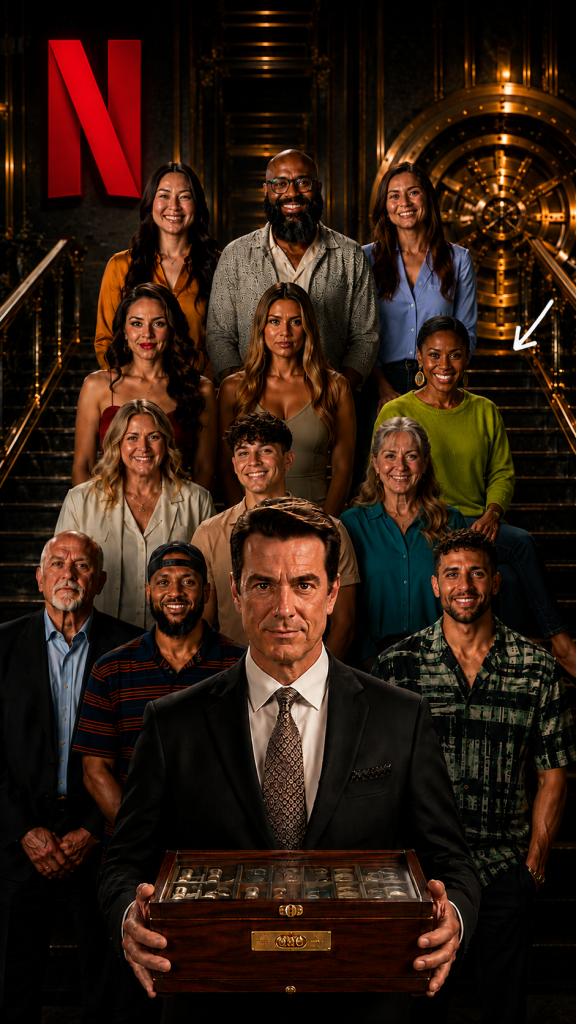
Imagine waking up to a real opportunity to win $1 million dollars, but there’s a catch.
You have to compete on a reality show that’s the first of its kind. So, unlike Survivor or Big Brother, you have no blueprint to go off of. There are no strategies to utilize. And you aren’t told the rules until after you arrive at a mansion, with 12 other strangers, where the host welcomes you in.
That’s exactly what happened to Jaimi Alexander—one of the most memorable, and to some, polarizing contestants of Netflix’s Million Dollar Secret.
Personally, I’m not a big fan of reality competition or dating shows like Love Island, Traitors, Love is Blind, and so on. I usually find them annoyingly petty, dramatic, staged, and superficial.
But one day, I found myself aimlessly searching through Netflix, as I stuffed my face with buttery Jolly Time. As I was clicking away, I saw the Million Dollar Secret icon, with a familiar face in the image. “That’s Jaimi!” I said out loud, nearly choking on my popcorn.
Back in 2020, I discovered her hosting on BuzzFeed, in conversation with a co-host about George Floyd. What I admired about Jaimi was her capacity to have raw, uncomfortable yet respectable talks despite their differing viewpoints. To that end, she and I ended up having discussions on my YouTube channel, discussing a range of hot topics including the infamous Oscar slap. So witnessing someone I knew in this type of scenario, who I know to be forthright and genuine, made me extremely curious about how things would unfold for her. Needless to say, I binge-watched the entire 10-hour season in just two days. No shame.
Here’s the breakdown: “A group of contestants lives in a luxury estate, and one player secretly receives a box containing $1,000,000. That player must keep their identity hidden while others try to deduce who it is and vote them out.” And how you keep your identity hidden is by lying, betraying, deceiving, and anything else that doesn’t involve honesty.
So the reason I’m engaging you with this essay isn’t about the show itself, but that perhaps our humanity isn’t built for reality TV. It felt like I was watching a sociology experiment rather than entertainment. Every elimination ended in tears; they cried with relief at making it another week, but also with guilt over what it took to stay. Even though the contestants understood this, their human side could not naturally adapt to these villainous tactics, even with 1 million dollars at stake. Something about that gave me solace. I was glad to see people struggle to stoop low for cash.
Now, remember when I mentioned Jaimi was considered one of the more polarizing contestants on the show? Playing devil’s advocate and as a compliment to her character, Jaimi was being herself throughout the game: direct, confident, and truthful. The problem is, everyone was trying to come across as trustworthy, which inevitably cast Jaimi into a villainous light, like the rest of them.
SPOILER ALERT: She made it through to the episode right before the finale. During her exit interview, Jaimi said something interesting, “I don’t have the capacity for this negativity.”
That’s been my argument againist certain reality TV from the jump. As humans, I don’t think were built for that type of curated toxic chaos. To discuss this more, I reached out to Jaimi for this conversation, and she graciously obliged. Here is our conversation about the Million Dollar Secret and the truth about the reality inside reality TV.
Q&A with Jaimi Alexander & Brittany King
Q: How did you get on the show, and what made you want to join?
Jaimi: During my Hollywood stuff, I use to always be in that life. I used to do music videos, I did game shows, I would do hir modeling on the Today show. But in 2023, I felt in my spirit that I wanted to get on reality TV. After my life coaching was doing really well I figured reality tv would be a great way to get the ball rolling with my business. In 2021, I audition for a dating show by Mona Scott that never happened but in 2023, she told me about the Million Dollar Secert and shared the opportunity, and that’s how I got there.
Q: The premise of the show is essentially deception—lying, manipulating and forming alliances. Yet everyone seemed genuinely surprised by how difficult it was for people to lie to one another. Why do you think that was?
Jaimi: We were spending so much time around each other, and inevitably, you’re connecting with people. Fundamentally, it’s hard to lie to people, and it’s hard to get lied to.
People online were saying, “Why are they in their feelings about people lying when this is a game of lies?” But being human still matters. Integrity still goes very far. When you’re not acting with integrity, it breaks down how we want to be seen in real life—as trustworthy and honest people.
Q: What shocked you most about the way you played the game—and about the way other people played it?
Jaimi: Some people made alliances specifically to take each other to the end. There were so many dynamics happening. And the producers had a lot of their hands in it.
Since we never saw the whole game before, we were picking up on “the game” as time went on. There was definitely a cognitive dissonance happening. There was one contestant who had a crush on someone, while another person thought that same person was like their daughter. It was wild because everyone was operating from their own perception of reality.
Brittany: To that point, did you think the perception of you was displayed correctly in the final edit?
Jaimi: Viewers thought they were getting the whole story in 45 minutes, when in reality, we were having 12-hour days. There was so much that happened. It was interesting to see both the social side and the game-playing side, but viewers only got a fraction of it.
With my edit, I was so shocked because I had so many moments where my instincts were on point. It could have been fun for viewers to see how spot-on someone was with their own superpower. I felt robbed of that.
Q: The show seemed, in some ways, like a microcosm of society—people making assumptions about one another based on appearance, personality and perceived power. As the only Black woman in the cast, how did that show up in your experience?
Jaimi: It definitely showed up a lot. I was looked at as the tall Black woman who doesn’t need any help. This was a life-changing experience for me. I’ve been somebody who’s had the luxury of curating my own world because of my qualities and character, even in Hollywood. Being the new kid in class wasn’t new to me. My dad was in the military, so we moved around a lot.
Even in my own family dynamics, I had cut the people-pleasing right before I came on the show. So I came into this experience with a different energy, and people did not necessarily like it. I think I’m generally a likable person. But it can be easy to gang up on me if people think, “She’s too much.” And a big part of this game is having an alliance. But no one felt like I needed protecting. And that’s not true.
Brittany: But that’s how we [Black women] are received in real life.
Jaimi: Baby, it’s a real thing.
Q: Do you think your honesty, directness, and ability to read people helped you in the game—or did it make the game harder because you couldn’t turn that automatically off?
Jaimi: Unfortunately, my past trauma caused me to develop this protection where I had to be able to read the room for my own survival. I think this was a gift and a curse for me because I feel like I feel everything. I’m too sensitive not to see what I’m feeling.
Brittany: You’ve talked about Lauren and said you could “see through her.” What were you picking up on that you don’t think viewers were seeing?
Jaimi: Everyone in that house was like a little superhero. Everyone was dope. Everyone was smart. That’s what made us so beautiful. But I could see through Lauren. I could tell she was sheltered. Whatever she was giving in her confessionals, I could sense it in real life. She was giving one thing that wasn’t all of her.
When Lauren left, the energy in the house changed. I even pulled her aside that day to see if she was okay because her energy was off. I still get hated messages about “how I treated Lauren.” And today, we don’t have any real beef. What’s online is social media exaggerating everything.
Q: I’ve always argued that the producers are the real menaces of reality television. Do you agree at all?
Jaimi: I didn’t necessarily trust the producers. They did not show everything that happened in that house. First of all, everyone in that house loved me. We all had a ball! We didn’t have our phone for three weeks and it was great. I feel our interactions were genuine. After my final interview, I was so loving and kind in my interview, but the only thing they pulled was when I talked about negative energy.
I felt like the producers played me. But I don’t take it too close to heart because I did sign on the dotted line, and they did what they did for entertainment.
Brittany: Speaking to that, after the show aired, you received a significant amount of backlash. People called you a villain, a bully, and other unkind things. What was that experience like for you?
Jaimi: Oh, girl. I am the most hated. [Laughs] On the show’s webpage, underneath all the contestants’ photos, there are maybe 50 comments. I have like 250 comments. People would rather show hate than love. People call me a villain. They tell me I should never be a life coach. They call me a bully—all because I called out a person who was actually bullying someone. On the show, I didn’t yell. I didn’t do anything. I just told her directly what it was. They said I was mocking Lauren. I wasn’t. I was talking about her energy.
Brittany: It feels like people are saying the things they should be telling their therapists. Hurt people, hurt people.
Jaimi: Exactly! I could never say that the beautiful blonde (Sydney) was being bullied by the short, quiet mom, but that was exactly what was happening. People saw it and were okay with it because Sydney looks the way she looks. The positive side of this experience is that people at home got to see how people really can act in real life.
I didn’t roll my neck. I didn’t snap my fingers. I was just a beautiful Black woman being direct, and I was the villain? Girl, bye. [Laughs]
Brittany: It feels like people had a problem with the package that delivered the message.
Jaimi: Correct! And people saying I shouldn’t be a life coach? You could never survive over here. You could never have a coach like me. I’m the daughter of a 20-year retired Marine. You would not survive.
Brittany: Reality television used to be something people simply watched and debated. Now viewers can directly attack the people they’re watching—sometimes with harassment and hateful comments. What do you think has changed?
Jaimi: It used to be cute back in the day. Now people can’t just watch a show. They’re putting curses on people’s lives. They’re bullying people. They’re giving death threats. It’s disgusting at this point.
Brittany: Sadly, I think that’s part of the entertainment for some people—to bully and say hateful things behind anonymity. People are miserable with their own lives, and they project that onto strangers because they can’t face their own reality.
Jaimi: One hundred percent!
Q: After living inside the game, what did you learn about people overall?
Jaimi: Not all people, but people are inherently good. First, everyone yelled and everyone cried. All the grown men—Phil cried, Chris cried, Corey cried. Everybody was crying! [Laughs] You see the very deep emotional dynamics people carry at their core.
Brittany: At the end of your elimination episode, you said, “I don’t have the capacity to handle too much negativity.” Looking back, do you believe leaving when you did was actually protecting yourself—or do you wish you had stayed because you believe you could have won?
Jaimi: I do think I left at the right time for my game, but I definitely believe I could have won the game. I do have regret. When I got voted off, the executive producer said I looked so much lighter. Before elimination, I told one of the contestants that however things played out, it played out. But I did not think I was going home that day. I regret not picking up certain clues. I wish I had been more calm so I could have picked them up. But reality TV is so much harder than people think.
Q: Would you do reality TV again?
Jaimi: I would do reality TV again because I’m broken in. I’m glad I had that rough patch with my family before going on this show. Becoming more comfortable with not making people comfortable really benefited me.
Even though it was hard, doing reality TV and thinking it’s going to turn out one way, and then having it end up completely differently—and being so motivated by it—I think I can take on anything because I’ve already had so much backlash handed to me. But I’m also glad I did this as my first reality show instead of a dating show. I’m more sensitive about my dating life and tender with my heart. A dating reality show would not have been a good first experience for me.
Brittany: Interesting. So being the Bachelorette would have been harder than playing a cutthroat game like this?
Jaimi: Oh, definitely. Especially because of production. I wouldn’t do a dating show like that because people don’t know how to act.
Q: What would you tell someone who wants to go on reality television but has no idea what they’re signing up for?
Jaimi: You need to have thick skin. You need to be self assured and have a certain level of self-love. It’s not for the weak. You dont know what’s going to happen. It’s a year and a half later, I still get hate messages. I do get love but I get more hate.
Brittany: Reality TV felt wholesome back in the day before social media.
Jaimi: Reality TV is not like it was back in the day. The producers are going to tell you anything. They are going to tell you “you’re going to be a star” and meanwhile they are plotting for the ratings. It’s not about you. If you dont feel like being pluck apart, don’t go on.
Follow Jaimi Alexander on Youtube or Instagram. Learn more about her “S.A.S.S.Y” life coaching here.
Jaimi’s work is rooted in a lifelong ability to understand what lies beneath human behavior. Born in Hawaii and shaped by Japan, New York, and Los Angeles, she has spent more than two decades studying people, wellness, and the patterns that drive how we think, behave, and relate to one another.
As an interviewer, observer, and “pattern translator,” Jaimi has spoken with hundreds of people and developed a unique ability to see the wound beneath the behavior, the belief beneath the cycle, and the person beneath the performance.
Her perspective comes not only from professional experience, but from a life of cultural immersion, reinvention, long-term relationships, and personal transformation. Her appearance on a Netflix show ranked No. 3 globally further expanded that platform.
The S.A.S.S.Y. Method is the culmination of everything she has learned and experienced—a framework designed to give others the clarity, tools, and shortcut she wishes she had along her own journey toward becoming her most authentic and sovereign self.