
Before moving to New York in 2014, I didn’t know Cinco de Mayo was celebrated in the United States. Growing up in Mexico City, Cinco de Mayo was not a big holiday, solo era un día libre.
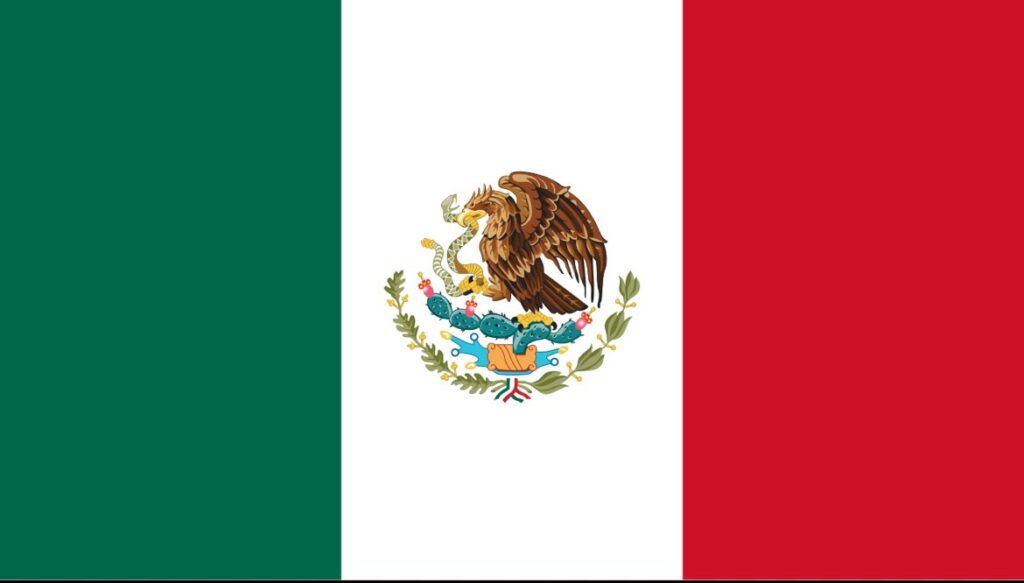
We had the day off from school, and I knew exactly what we were commemorating —the victory of the Mexican Army against the French troops in one specific battle before Mexico would ultimately lose the war, get invaded, and have the government overthrown and replaced with an emperor assigned by France. It was confusing enough to celebrate a small victory, but to then come to America and find out that the holiday was a much bigger deal, in a country that had no part in the matter, was borderline ridiculous.
And where did I find out about the best version of this nonsensical celebration? Manhattan.
A couple of months after moving to the Big Apple, I was making my way to school across Union Square and watched people “celebrate” Cinco de Mayo. I love a celebration more than most, but this felt different, a bit like an extra rowdy mockery.
Later, I learned that many cities in the U.S. use this holiday as a great excuse to drink. I could guess that no mentions of the Mexican or the French army came up in these conversations while chips and weak, mild salsa were being devoured. That’s fine.
Before May 5th, the amount of signage announcing cheap deals on Margaritas and dinner specials at restaurants that weren’t even Mexican seemed a bit excessive. Funny enough, Margaritas also happen to be a spot-on drink for the commemoration, since they are made of tequila and orange liquor, which is traditionally French. Losing consciousness from having too many is different.
When the day of Cinco de Mayo finally came, viral memes and friendly invitations to celebrate blew up my phone.
U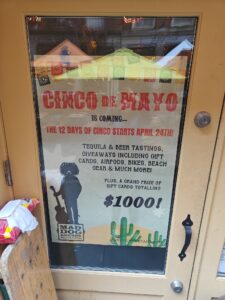 nfortunately, the start of my Cinco De Mayo turned sour pretty quickly. On my way to class around noon, I stumbled upon an unconscious man, wearing a sombrero and a half-unbuttoned shirt, lying outside the Union Square subway station. He was very ethnically ambiguous. He was sort of Black, sort of Brown. He was unlikely to be Mexican, but he could’ve been Latino, like Dominican, Puerto Rican, or American.
I couldn’t help staring as a police officer approached him while putting on plastic gloves to shake him awake. When the passed out man finally regained consciousness, he was completely disoriented. He seemed like it would be easier for him to throw up before he could try to stand up. This was not a homeless man who had had to fall asleep on a busy sidewalk, this was a Cinco de Mayo disaster.
I’ve participated in all kinds of city festivities —Pride, the Holi, Thanksgiving parades — so seeing a person in bad shape wasn’t a strange occurrence.
But the holiday in NY only got worse from there. Throughout the day, I saw exaggerated and offensive stereotypes and misconceptions of Cinco De Mayo everywhere —on social media, in advertisements, in department stores, drugstores, and even on products.
Many Americans seem to think Cinco de Mayo is Mexico’s Independence Day. Here’s a quick history lesson: the War of Independence in Mexico against the Spaniards ended in 1821. Then, in the 1830s and 1840s, the Texas Revolution and the US-Mexican War separated many Mexican families on different sides of the US border. A few years later, in 1862, the Battle of Cinco de Mayo happened. To be fair, many Mexicans considered Cinco de Mayo just as great a victory as the War of Independence at that moment. But because of the French occupation that followed, an immediate large immigration wave from Mexico into the US took with it the Cinco de Mayo celebration. For those who remained, however, it became an isolated event followed by years of instability.
Whatever its origin, the misunderstanding of it in America has become its own thing. It is nothing but a drunken party and cultural appropriation.
In different instances, such as the Día de los Muertos (Day of the Dead), the tradition is to remember our loved ones who have died and to celebrate their lives. This is a need anyone might experience. So, if someone who is not Mexican wants to celebrate it and gets their face painted as a skull, that does not affect the tradition. If they want to visit a graveyard, where families carry on their ceremonies, it isn’t an issue as long as it’s done with respect.
Cinco de Mayo is not about food or alcohol. It is about bravery, patriotism, and freedom. It is about protecting a culture. It is about standing against entitled invaders. It is also about being subjugated but not defeated. And unfortunately, it’s a reminder of what many nations are enduring right now.
I’d be remiss if I didn’t mention this: Cinco de Mayo is also an opportunity to recognize the hard work and resilience of Mexican immigrants. This is a day for those who endlessly work long hours in the kitchens of restaurants, only to receive a patronizing tip and political threats the minute they step out of work. It is for those who make creative work to express their truth, even though it might be overlooked throughout the year. It is for those who have achieved a competitive position in a large corporation, to only get a public shout-out on Cinco de Mayo because they’re “the Mexican employee.”
Above all, no matter the culture, its traditions should be respected. People who fight for freedom should be remembered. When we lose sight of that, we inevitably devalue, disrespect, and erase their importance and history.
So, cheers to more of us who are deciding to reconsider how we treat historical holidays and rethinking if a $12.00 tequila special really honors the people who fought for my community to be free to celebrate.