
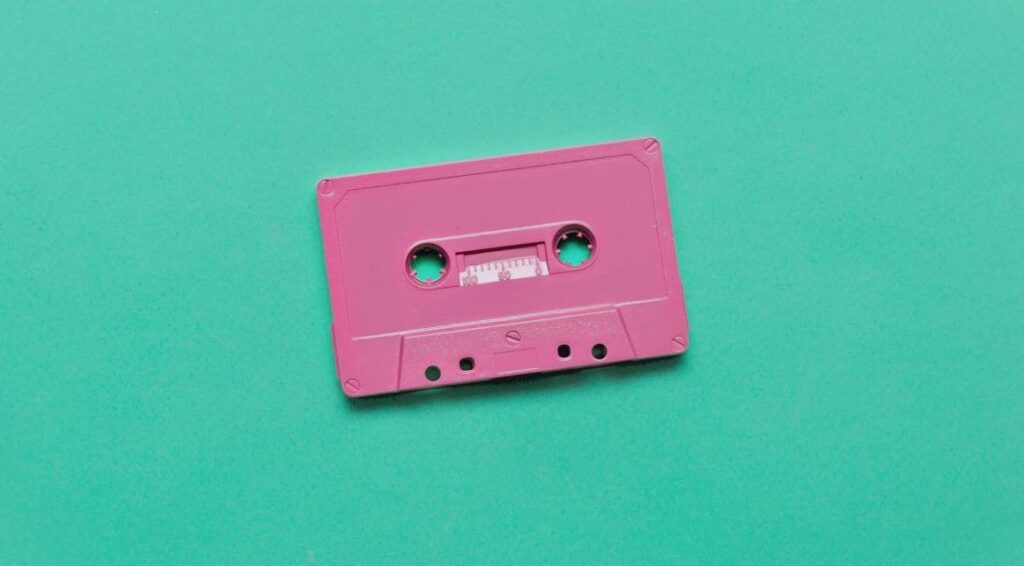
Lately, the past feels closer than ever.
Everywhere I turn, someone’s bringing it back: low-rise jeans, grainy camcorder filters, flip phones, Y2K playlists on repeat. Even my social media feed looks like a time capsule, full of reboots, remakes, and “throwback” aesthetics.
It’s as if the world has collectively decided that the safest place to be is somewhere behind us.
I used to think nostalgia was just kitsch, a love letter to simpler times. But the older I get, the more it feels like a coping mechanism. When the present feels unstable and the future uncertain, the past starts to glow like a mirage: blurry, idealized, unreachable. And yet, we keep walking toward it.
There’s something almost spiritual about the way we seek comfort in the familiar.
Old songs, old sitcoms, even old internet aesthetics offer a kind of emotional gravity. They remind us of who we were before everything sped up, before climate anxiety, economic precarity, and digital burnout became background noise. Maybe it’s not that we miss the past itself, but the version of ourselves that lived in it: slower, less watched, less worried.
I feel it most when I scroll through old photos, the ones taken on early-2000s point-and-shoot cameras. The flash is too bright, the composition terrible, but there’s something innocent about them. Nobody was curating their “brand” back then. We just existed. Now, every image we share feels like it’s competing for attention in a digital coliseum.
Nostalgia gives us a brief break from performing.
But nostalgia can also be a trap, a soft blanket that slowly becomes a blindfold. The more we idealize the past, the easier it becomes to romanticize eras that were never as kind or simple as we remember. The early 2000s might have been full of glitter and MySpace playlists, but they were also steeped in entertainment, with themes that normalized discrimination against marginalized individuals.
Still, I get the appeal. It’s exhausting to imagine the future right now. Climate forecasts sound like horror films. Rent feels like a luxury item. Every month brings a new technological disruption that promises to “revolutionize” our lives while quietly eroding our attention spans. Against that backdrop, nostalgia offers a sense of control. The past, for all its flaws, is at least familiar, and in a world that feels increasingly unpredictable, familiarity feels like safety.
Psychologists say nostalgia can be a grounding way for us to regulate our emotions and connect across time. It links who we were to who we are. But when that link becomes an escape route, it can quietly stall our capacity for imagination. If the past is all we look toward, what happens to the future?
Maybe that’s the quiet danger of this nostalgia boom: it’s comforting us into stillness. We’re remixing, remaking, and reliving rather than reinventing. Our culture has turned memory into a brand. Even the rebellion of the past punk, grunge, and Y2K angst has been neatly packaged and resold. What was once counterculture is now a marketing strategy. We’ve made nostalgia the currency of a generation too anxious to dream forward.
And yet, I don’t think nostalgia itself is the enemy. It’s the imbalance that hurts us, the way we get stuck replaying what was, instead of reimagining what could be. The future doesn’t have to feel like a void. It can be a continuation, not a cliff. The trick is learning how to visit the past without trying to live there.
I’ve started thinking of nostalgia as a mirror, not a map.
It reflects what I miss about community, slowness, physical connection, and challenges me to build those things now, in real time. When I feel the ache of missing an era, I ask myself: What exactly am I mourning? Usually, it’s not the flip phones or the fashion; it’s the sense of meaning, the moments that felt unscripted. That’s what we’re really chasing when we chase the past, a reminder that joy didn’t used to be so hard to find.
Maybe nostalgia is our collective grief for futures we were promised but never got. It’s the echo of a world that felt possible before the headlines, before the algorithms, before hope became a kind of endurance sport. But if we can use that ache not as a hiding place but as fuel, maybe nostalgia can become something radical: a way to remember that we’ve built better worlds before, and we can again.
The past hits hard because it’s proof that life once felt full and tangible. But so can the present, if we let it. The challenge now is to look backward without losing sight of what’s ahead, to hold tenderness for what we’ve lost and also curiosity for what we might still create.
Because the truth is, the future will remain fragile only if we keep treating it as if it doesn’t belong to us.